Project — 01 / 05
Designing for Care
A research project exploring care as a starting point for design, through principles and three objects.
- Type
- Research project
- Year
- 2026
- With
- Maria Erdal Jørgensen & Rose O'Sullivan
Overview
A lot of design decisions are made on intuition. We started out trying to make that silent judgement explicit, but the more we learned, the more we saw two things: how enormous that task is, and how much value sits in the tacit knowledge that feeds intuition in the first place.
So the question shifted, from explaining intuitive judgement to sharpening it. Designing for Care is the result: a set of reflective principles grounded in Yuriko Saito's Aesthetics of Care, developed alongside three objects, exploring how care—for users, materials, and the systems around production—can be seen and felt in an object.
The principles and the objects were made at the same time, each informing the other. Writing built a framework to shape the objects; designing them tested and sharpened the principles against the real decisions of making.
In conversation with Saito
We sent a draft of the principles to Yuriko Saito and met with her to discuss them. She was generous and engaged, and expressed that we had captured all the important points she was trying to convey about our care relationship with objects, appreciating in particular that the principles stayed open and invited reflection.
Her suggestions came as open questions she didn't claim to have answers to herself: whether the framework should address materials that don't age gracefully, and whether it might engage more directly with the pre-life of objects—where materials come from, and under what conditions they are made.
The principles
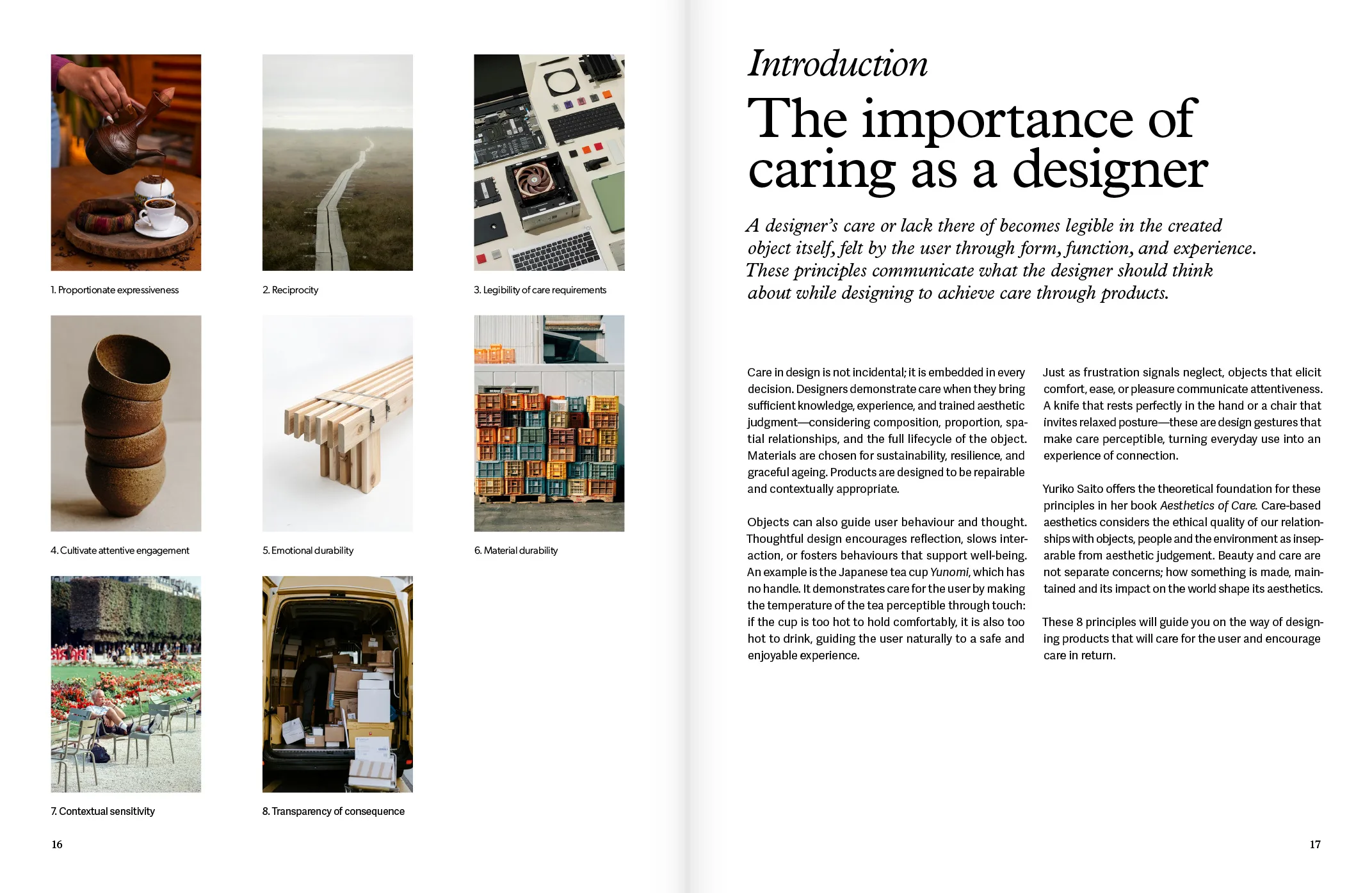
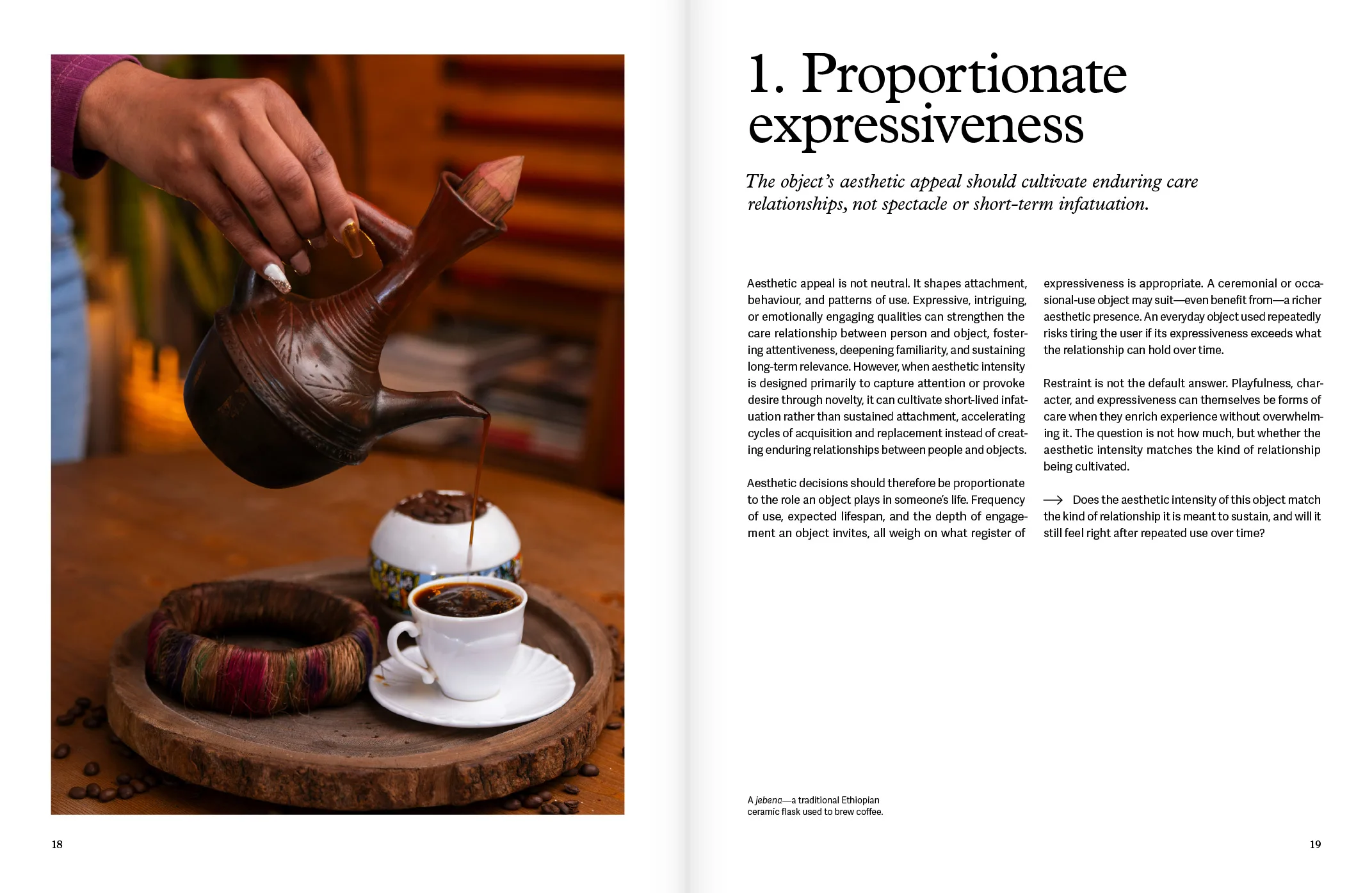
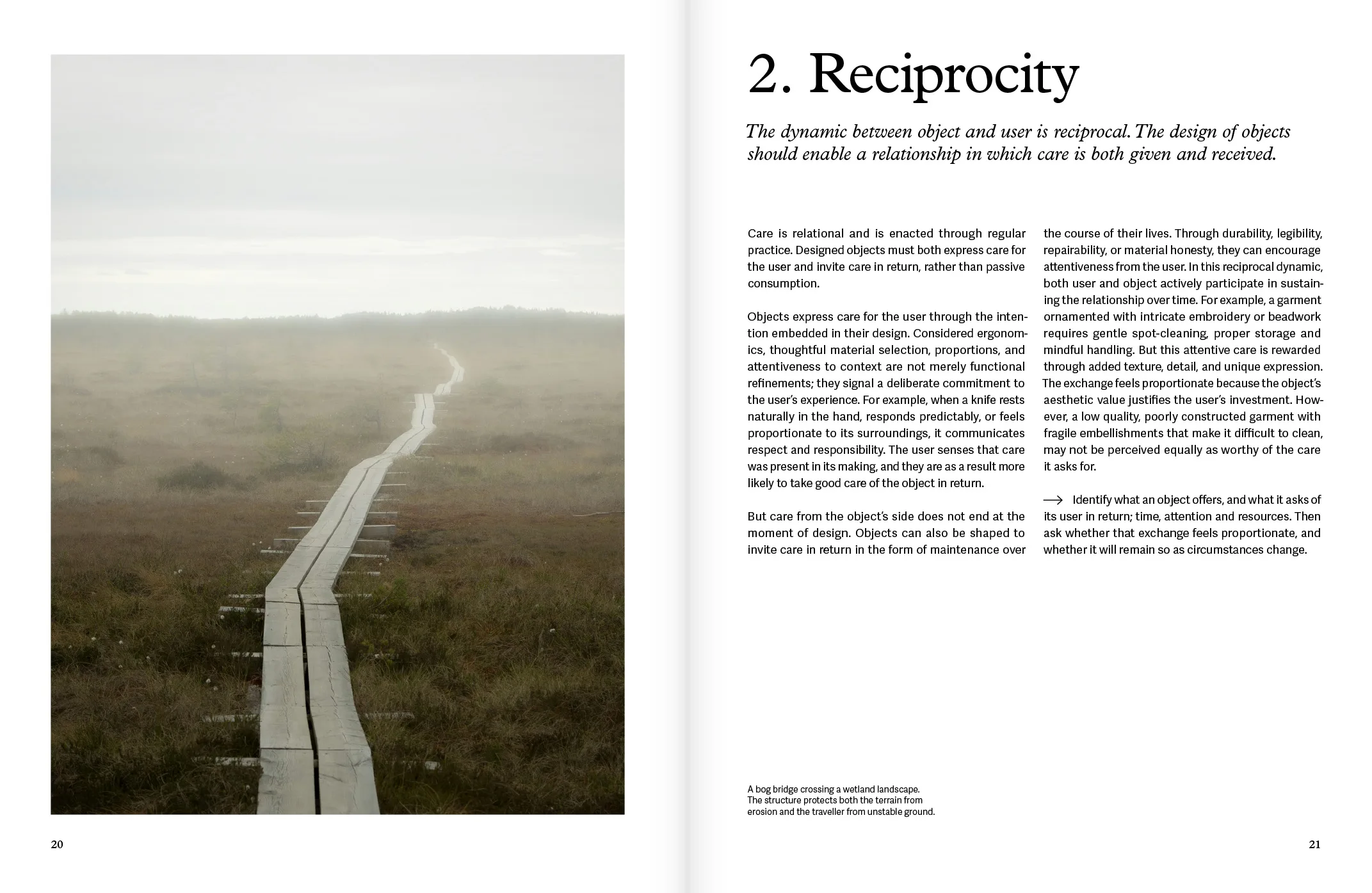
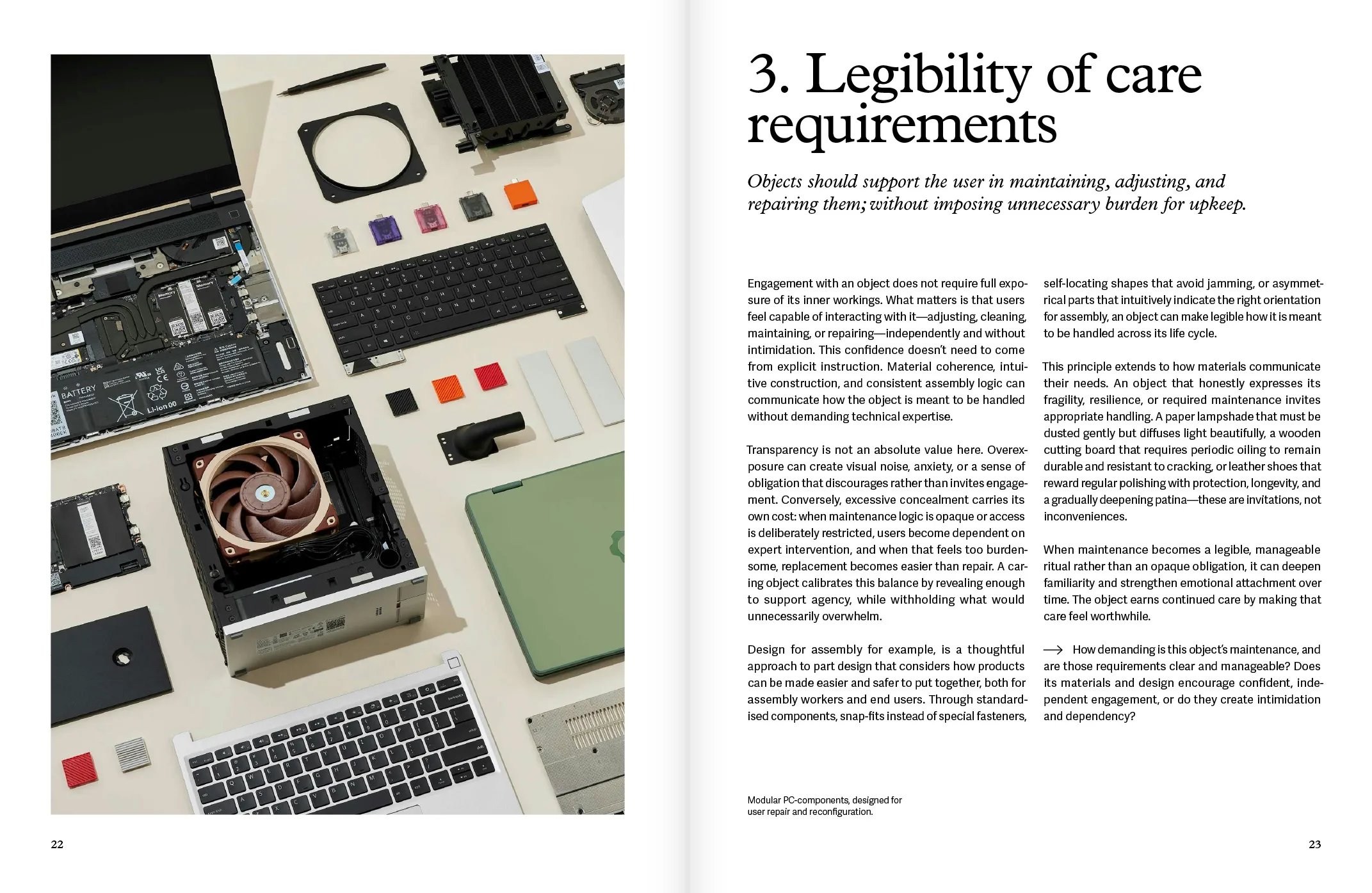
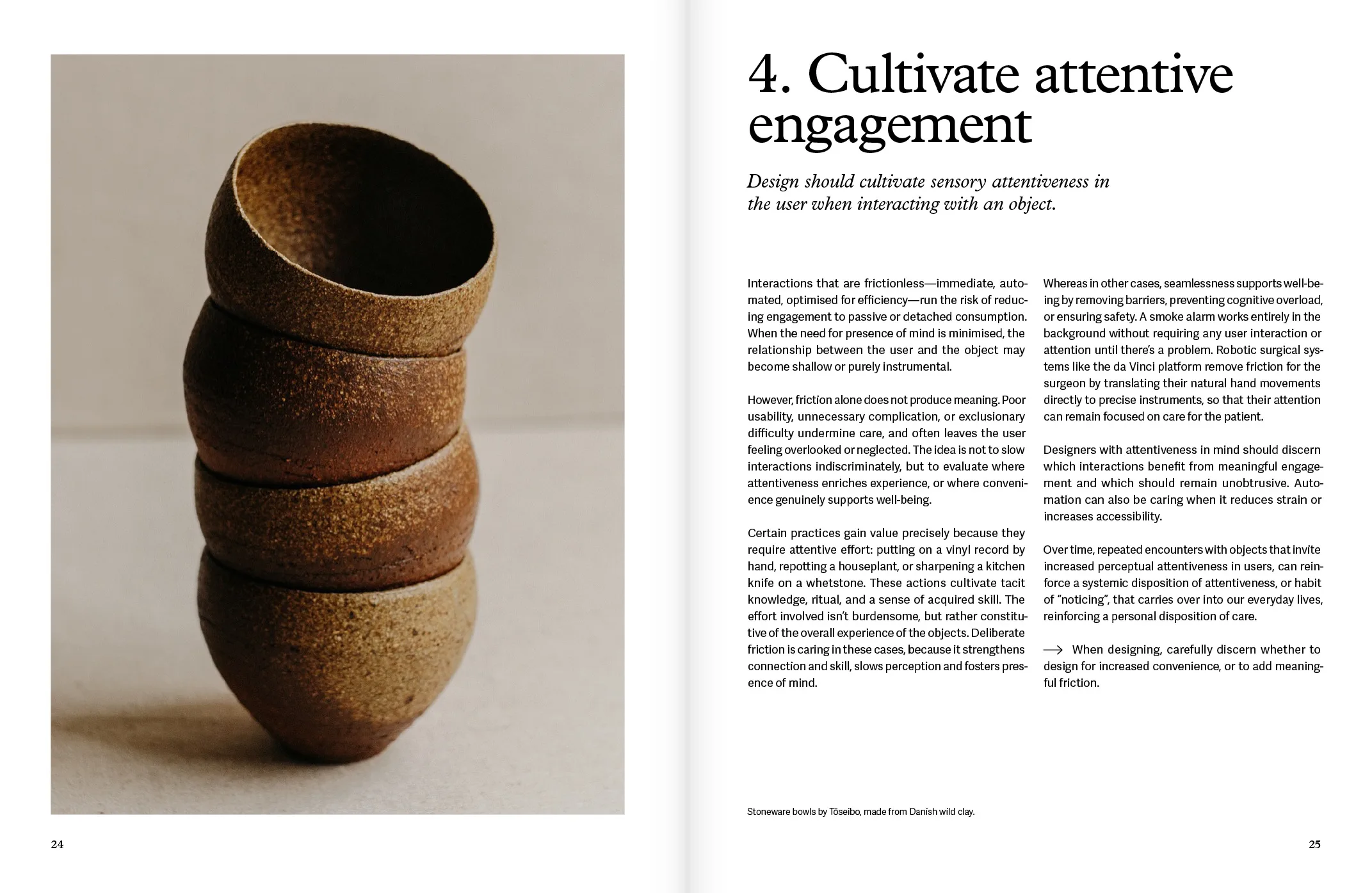
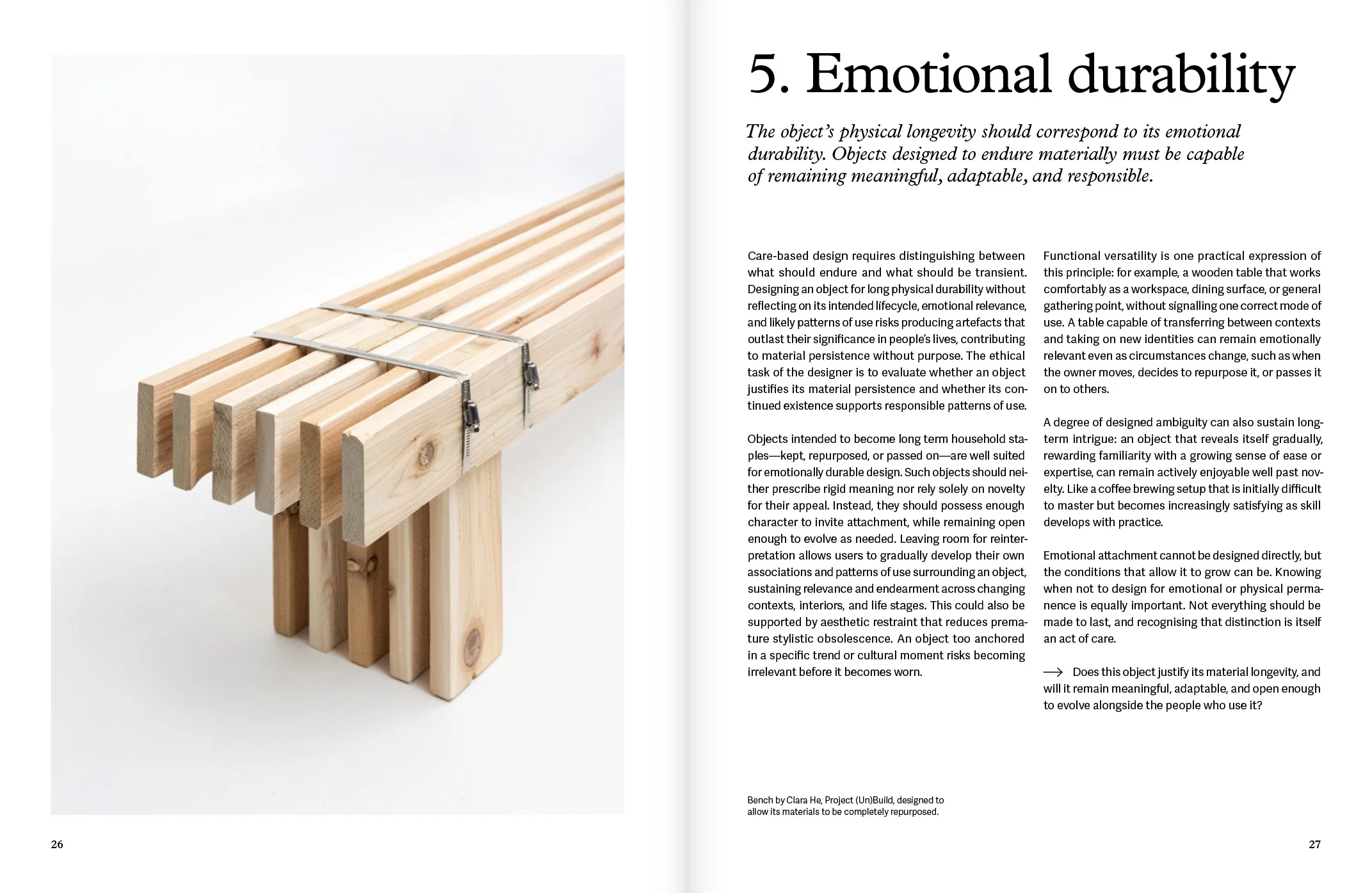
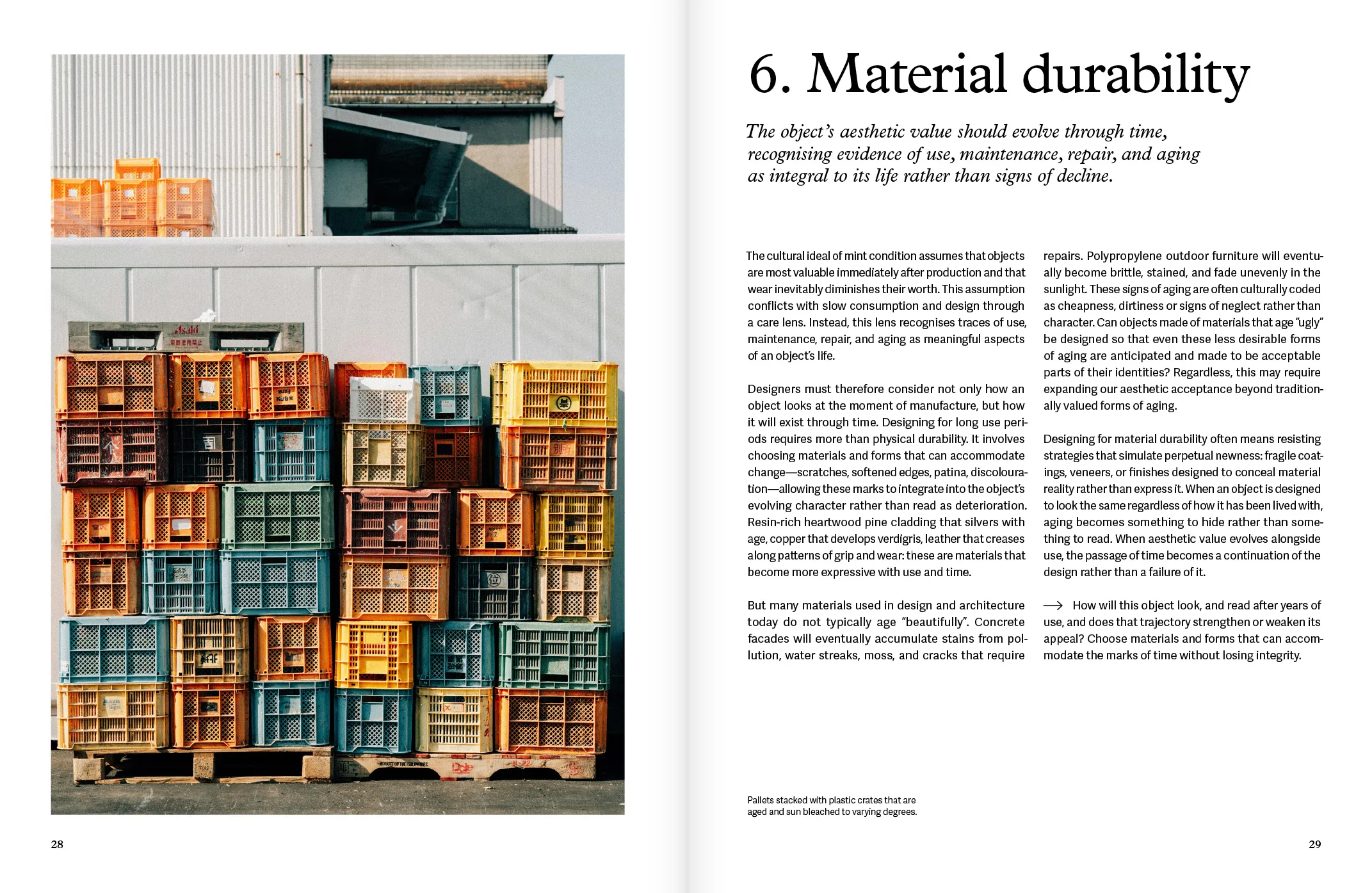
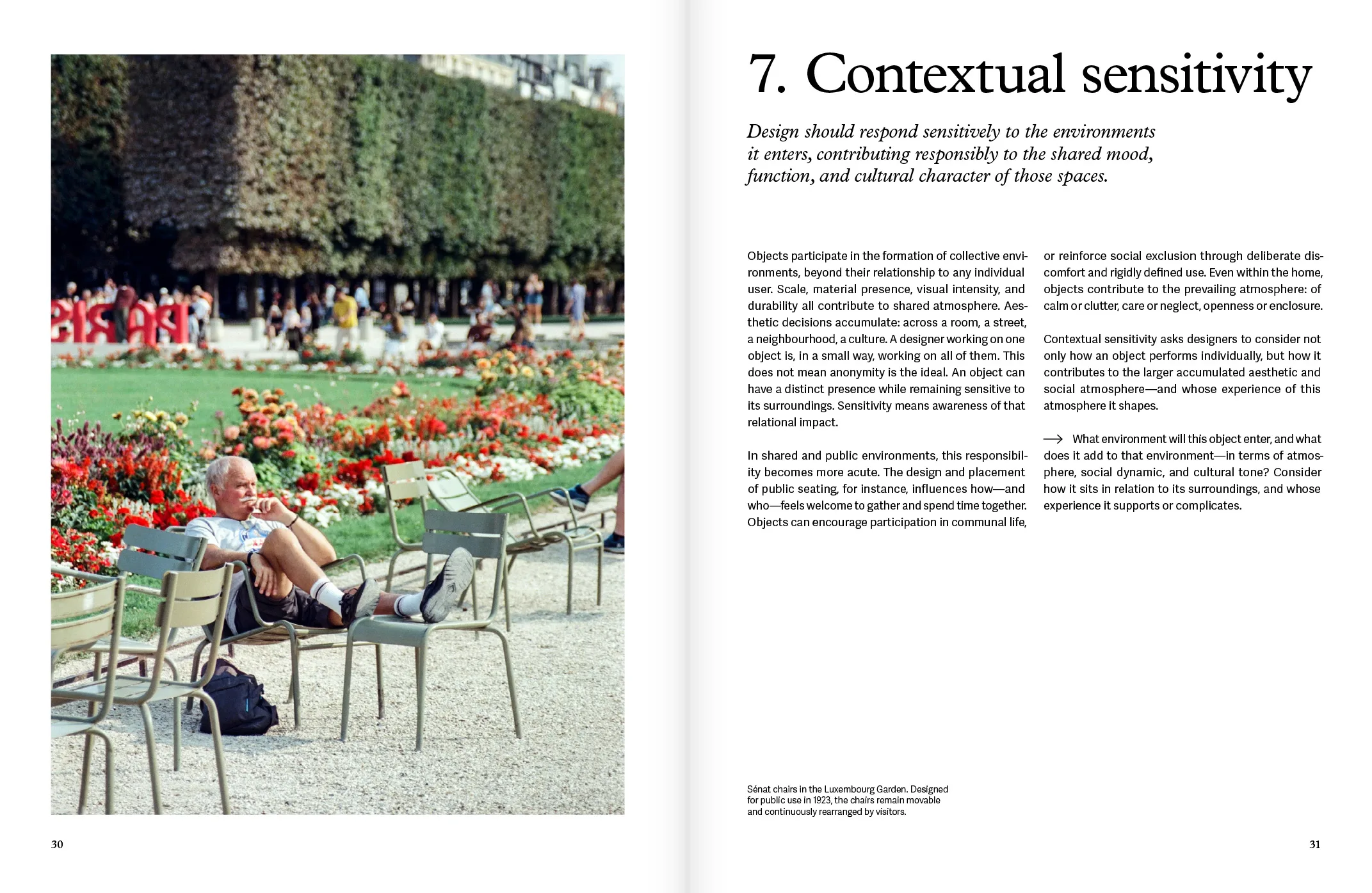
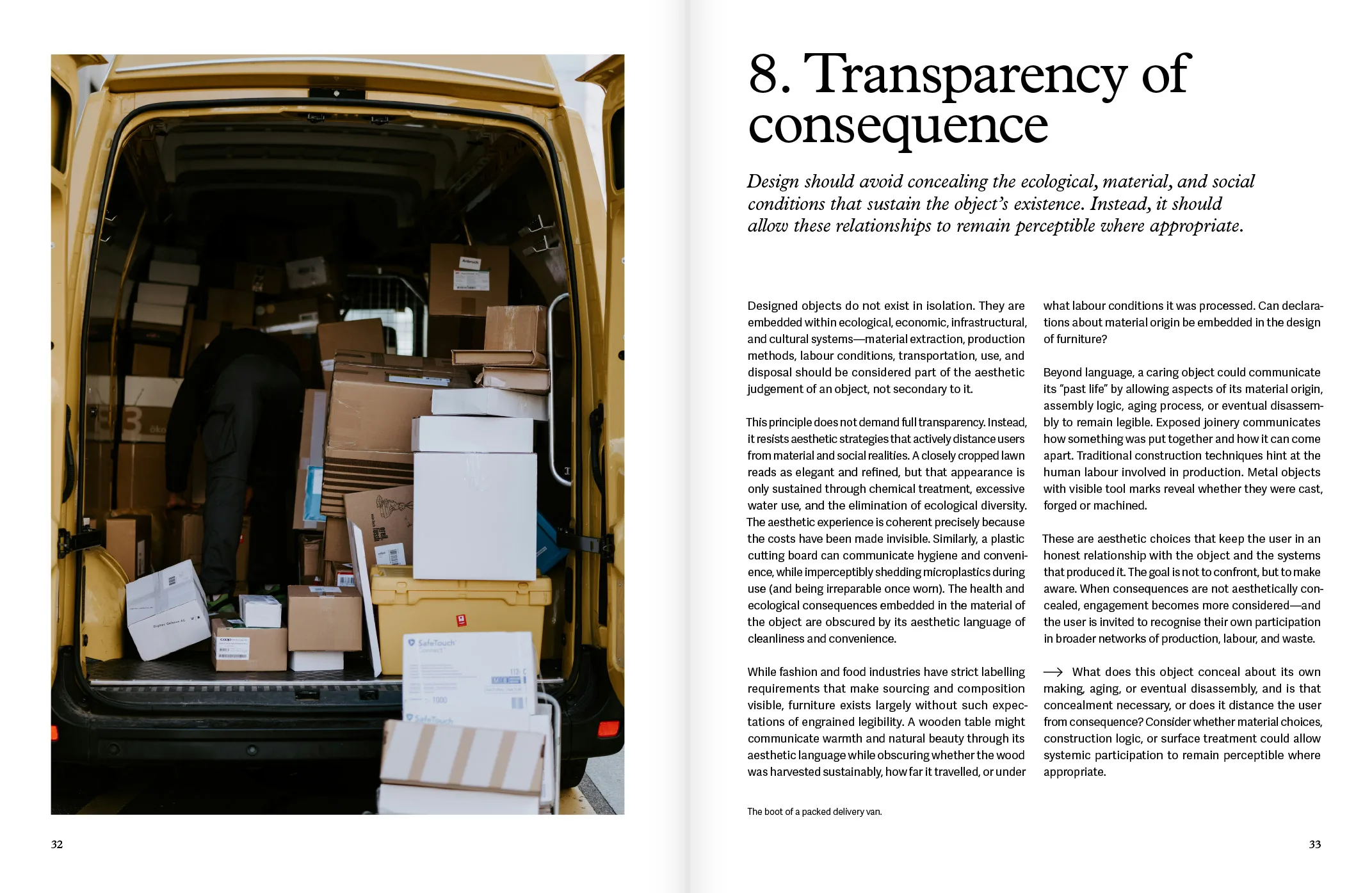
Eight principles, grounded in Saito's thinking and translated into something more applicable for a designer. They address different parts of an object's life—from the materials it's made from to the systems it's embedded in—and each ends in an open prompt or question.
They are prompts for slowing down, questioning assumptions, and making care visible—there to support a designer's judgement.
The three objects
We set the home as our context, and narrowed to small homes, where material, formal, and spatial decisions are most acute. To ground this, we visited a 21 m² studio apartment and identified three everyday situations where we could intervene: coming and going, hosting, and living in a single room.
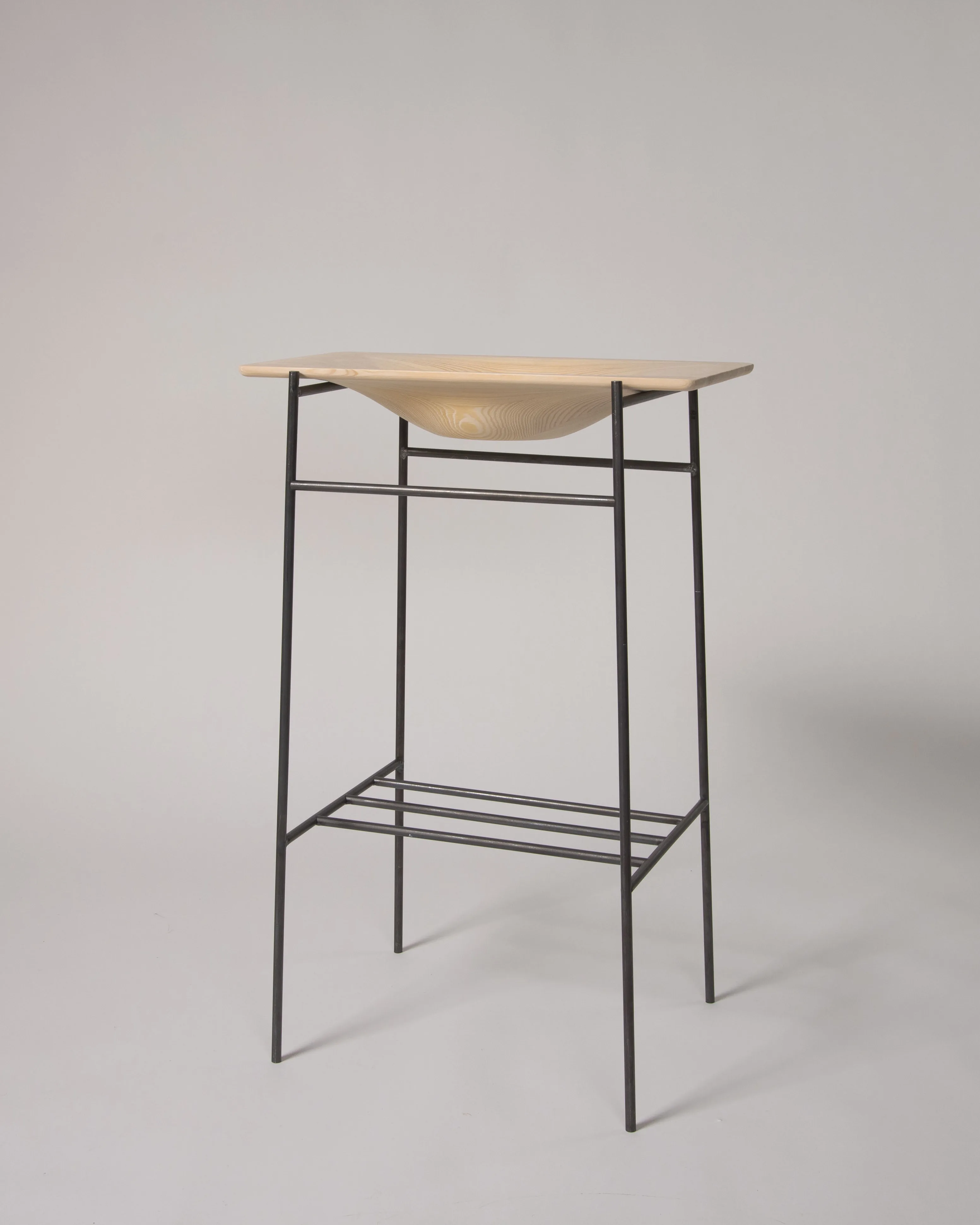
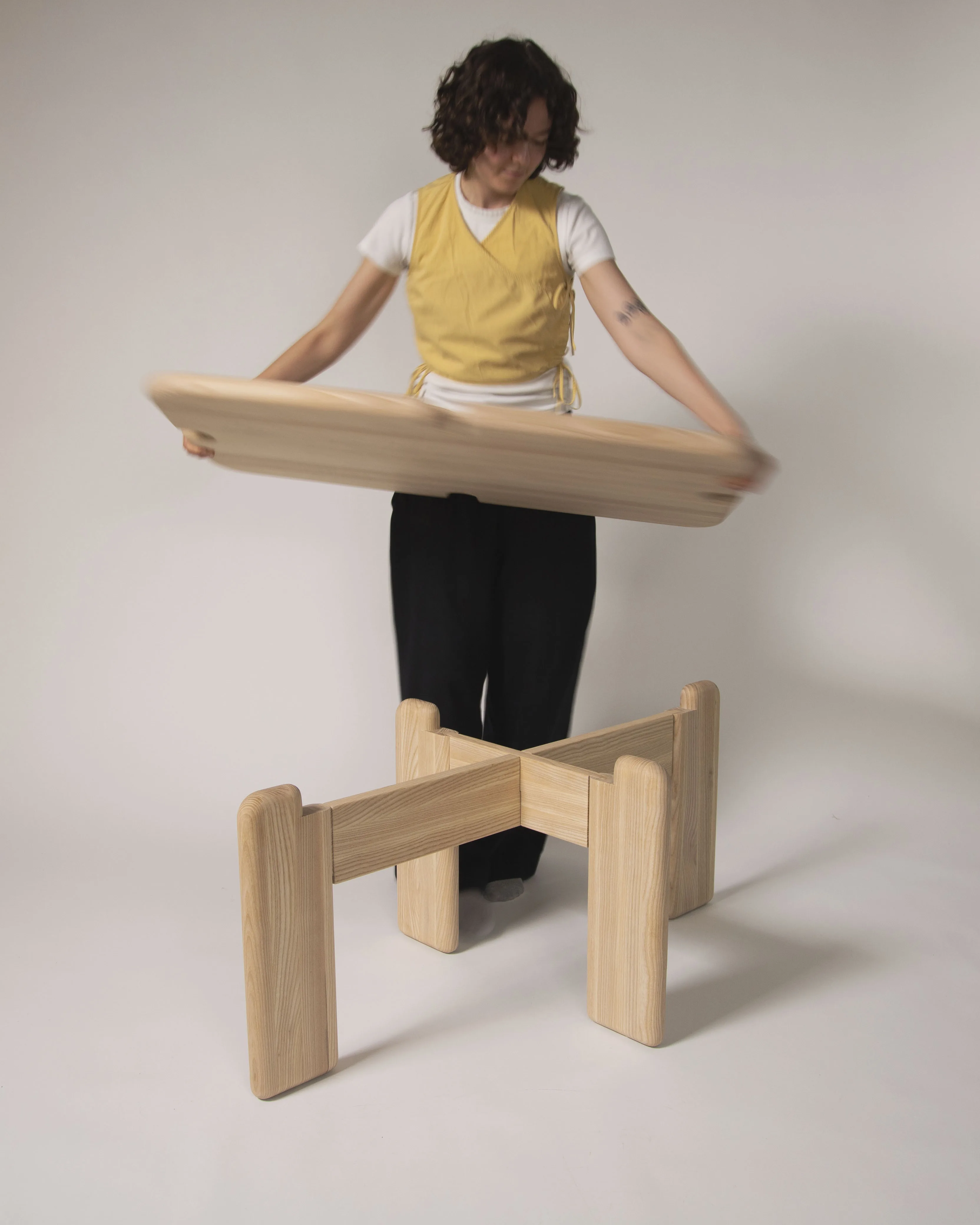
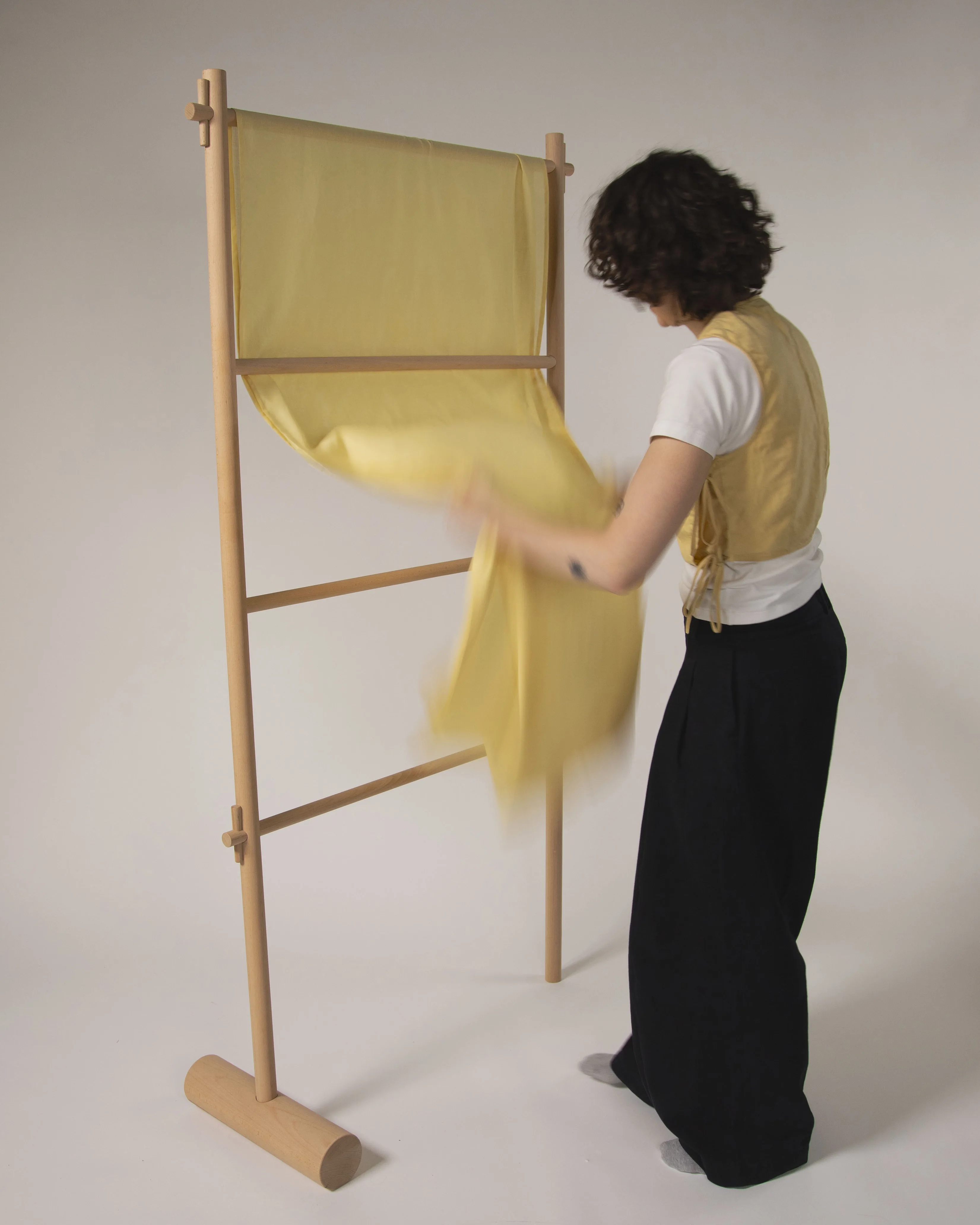
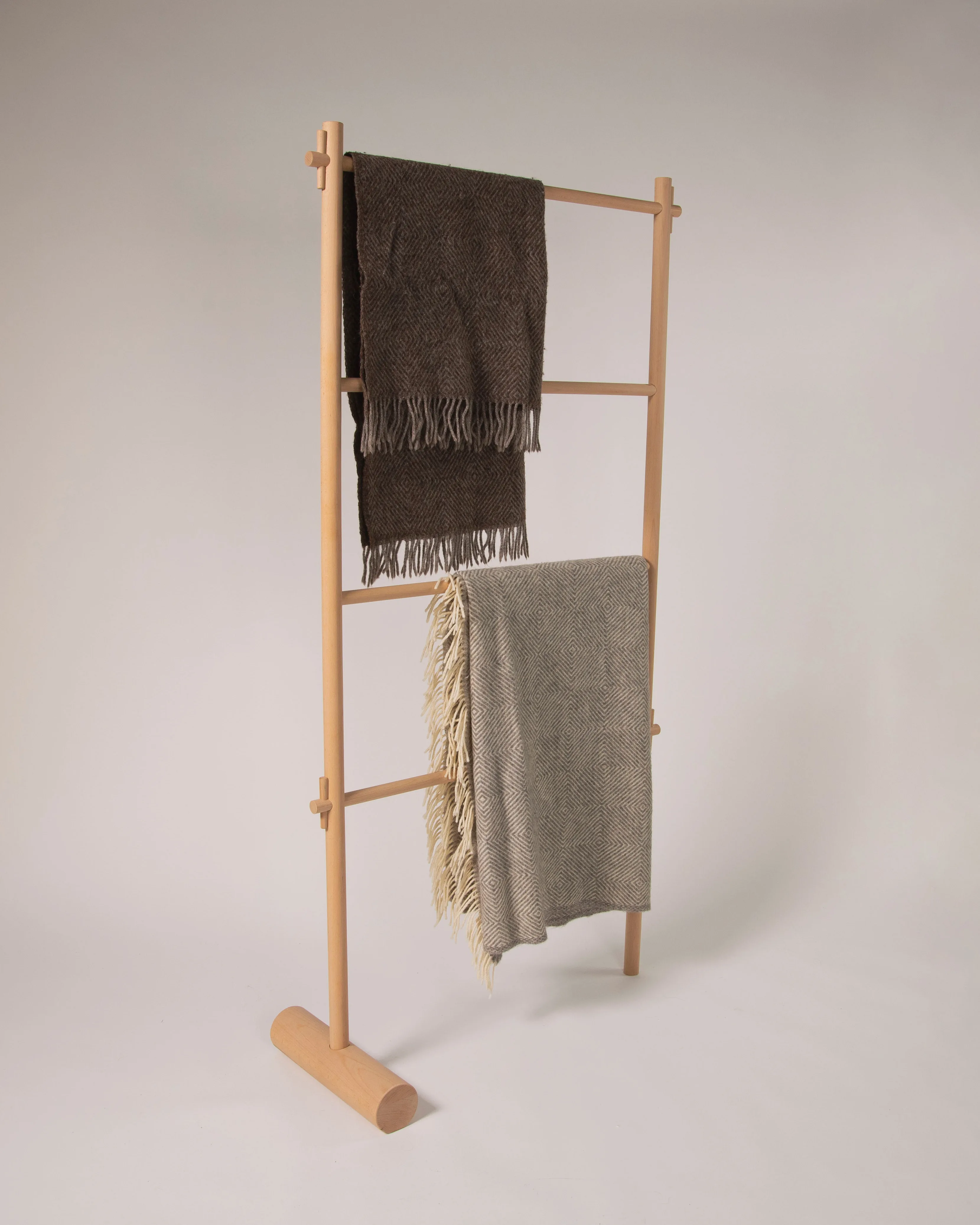
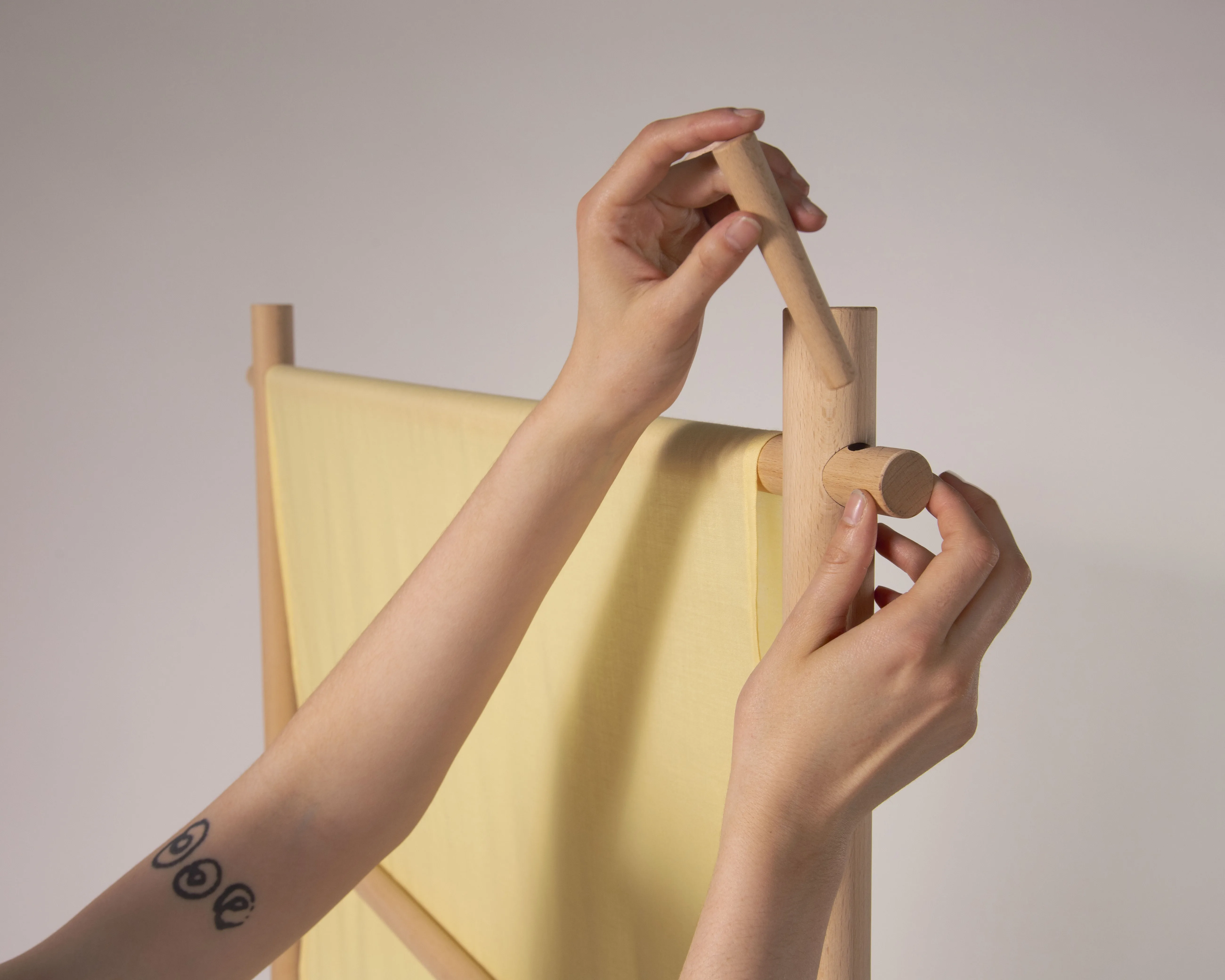
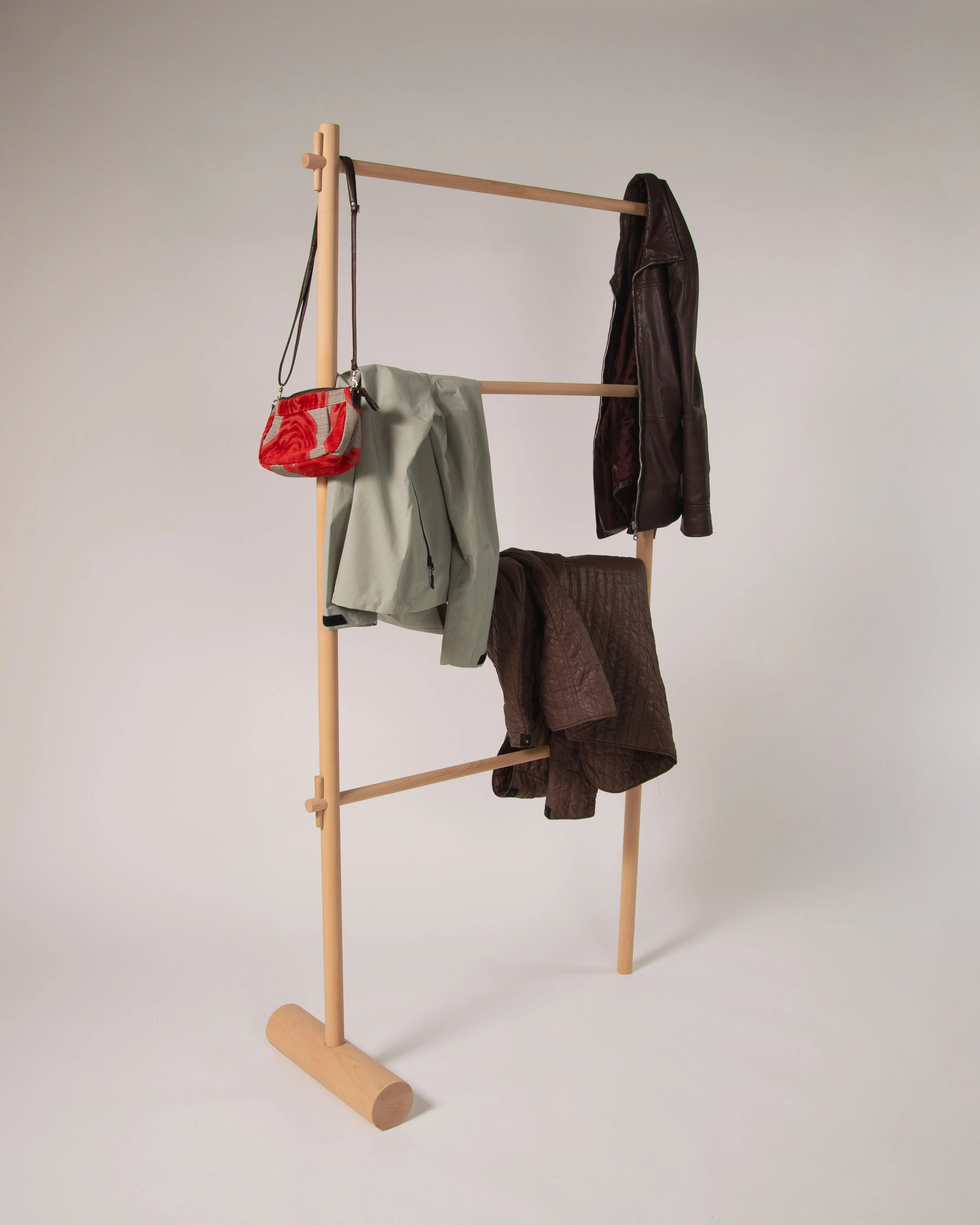
Anker supports the threshold between outside and in. Kin is a low table with cushions that tuck beneath it, offering seating when guests arrive. Trellis is a flexible, soft partition for dividing a space.
The objects are examples of how the principles might manifest, and together with the principles, they're starting points for discussion.
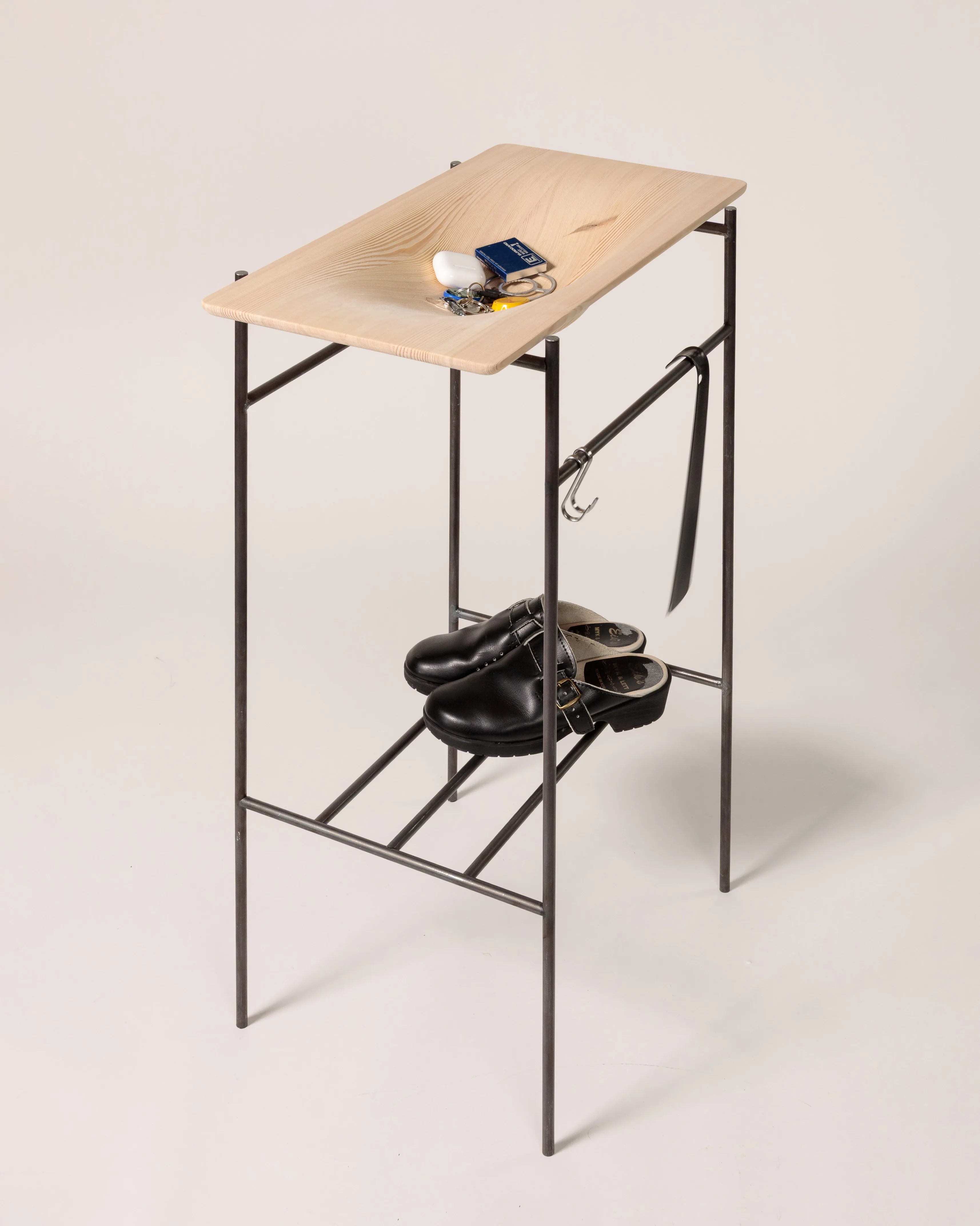
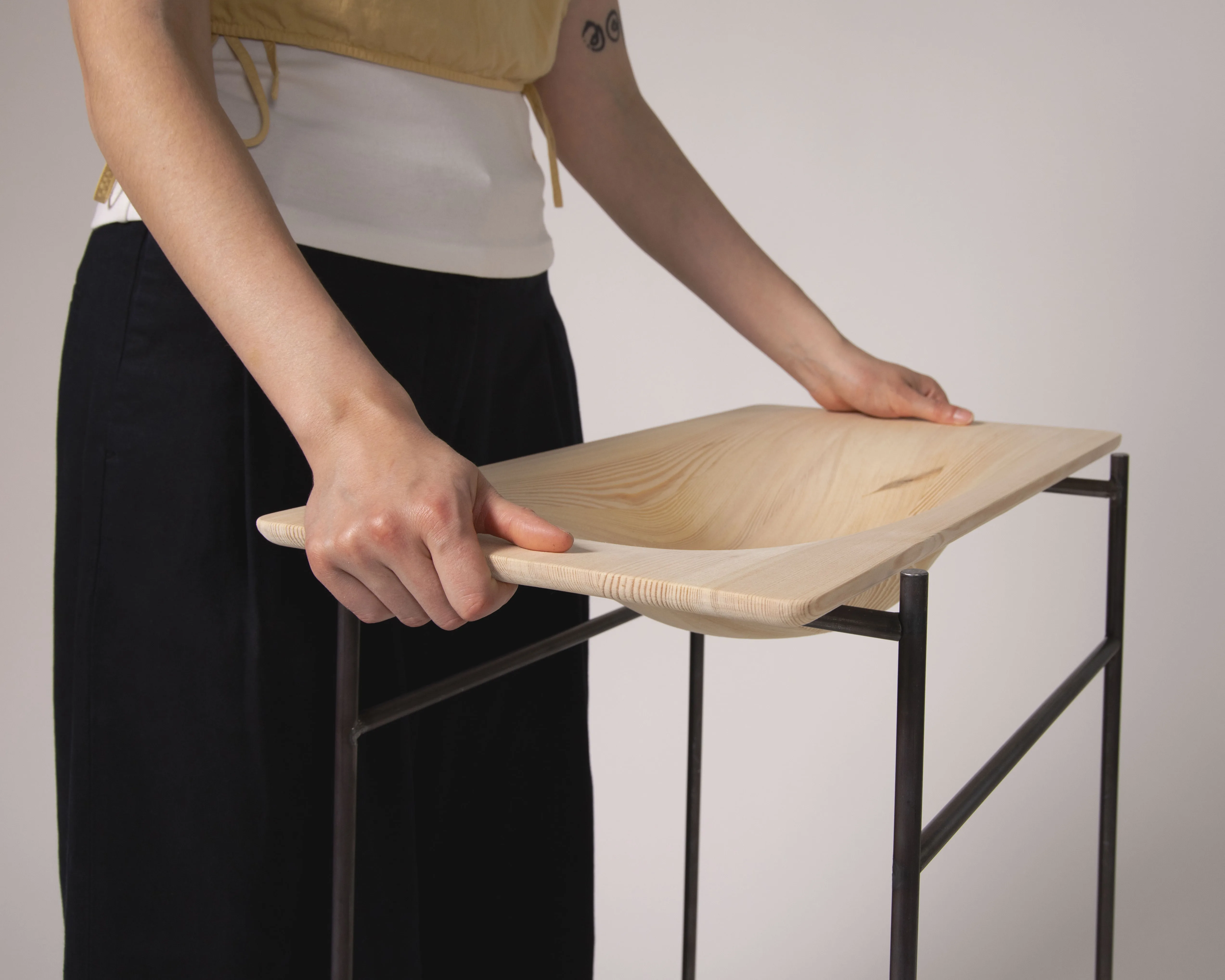
Anker
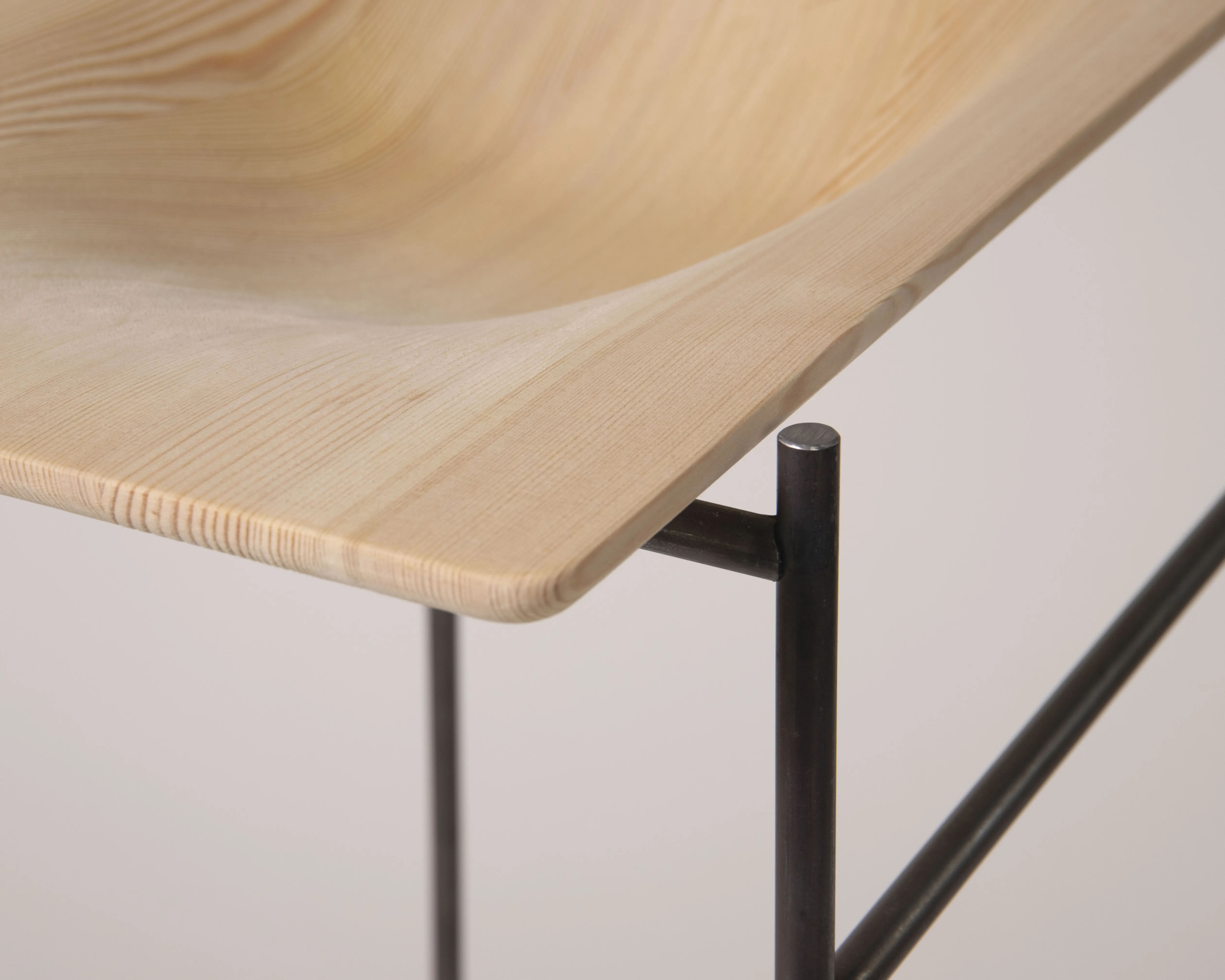
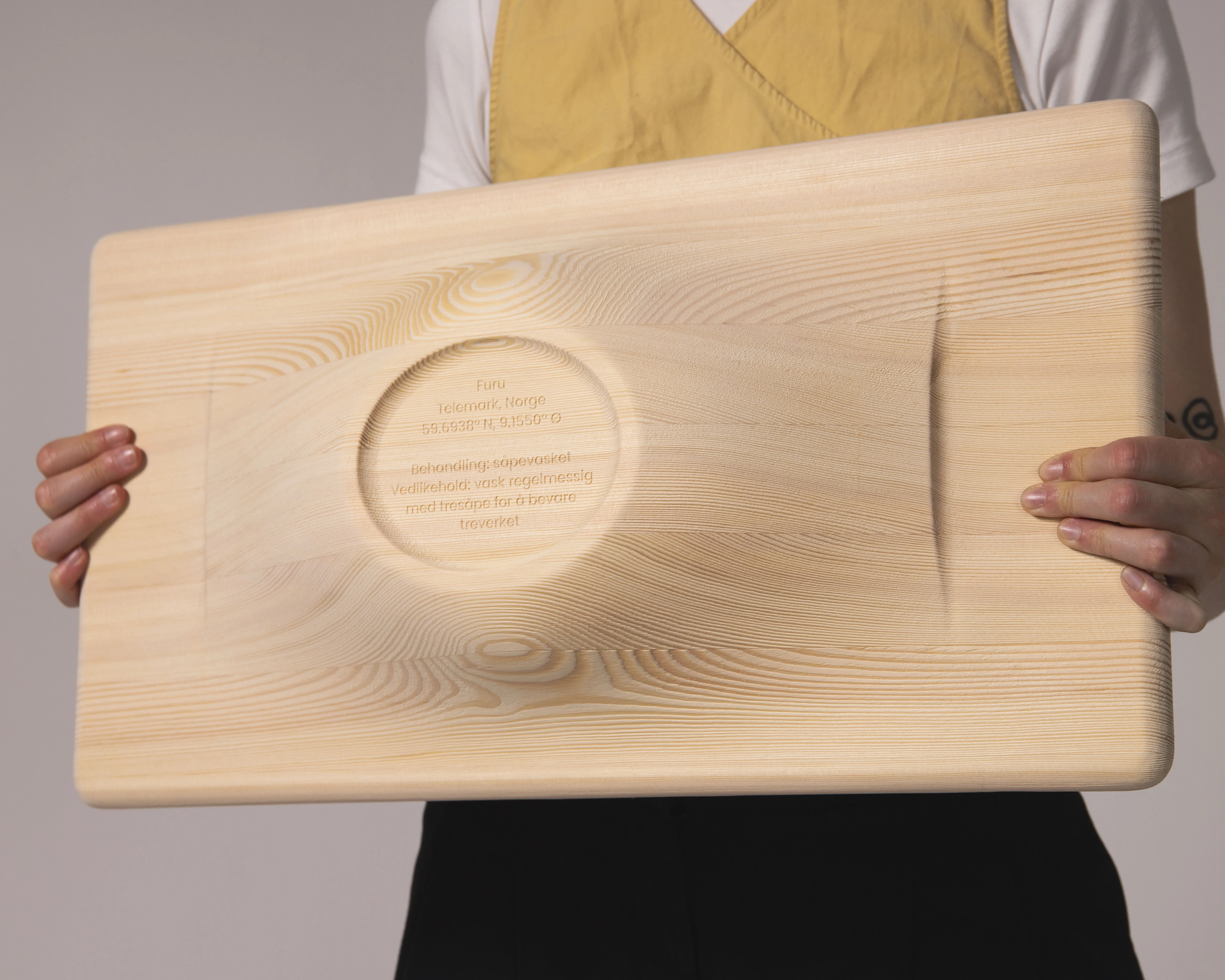
Anker is a piece designed for the entryway. It holds your usual pocket belongings and anything else you might need to temporarily offload when you get home or before you go out.
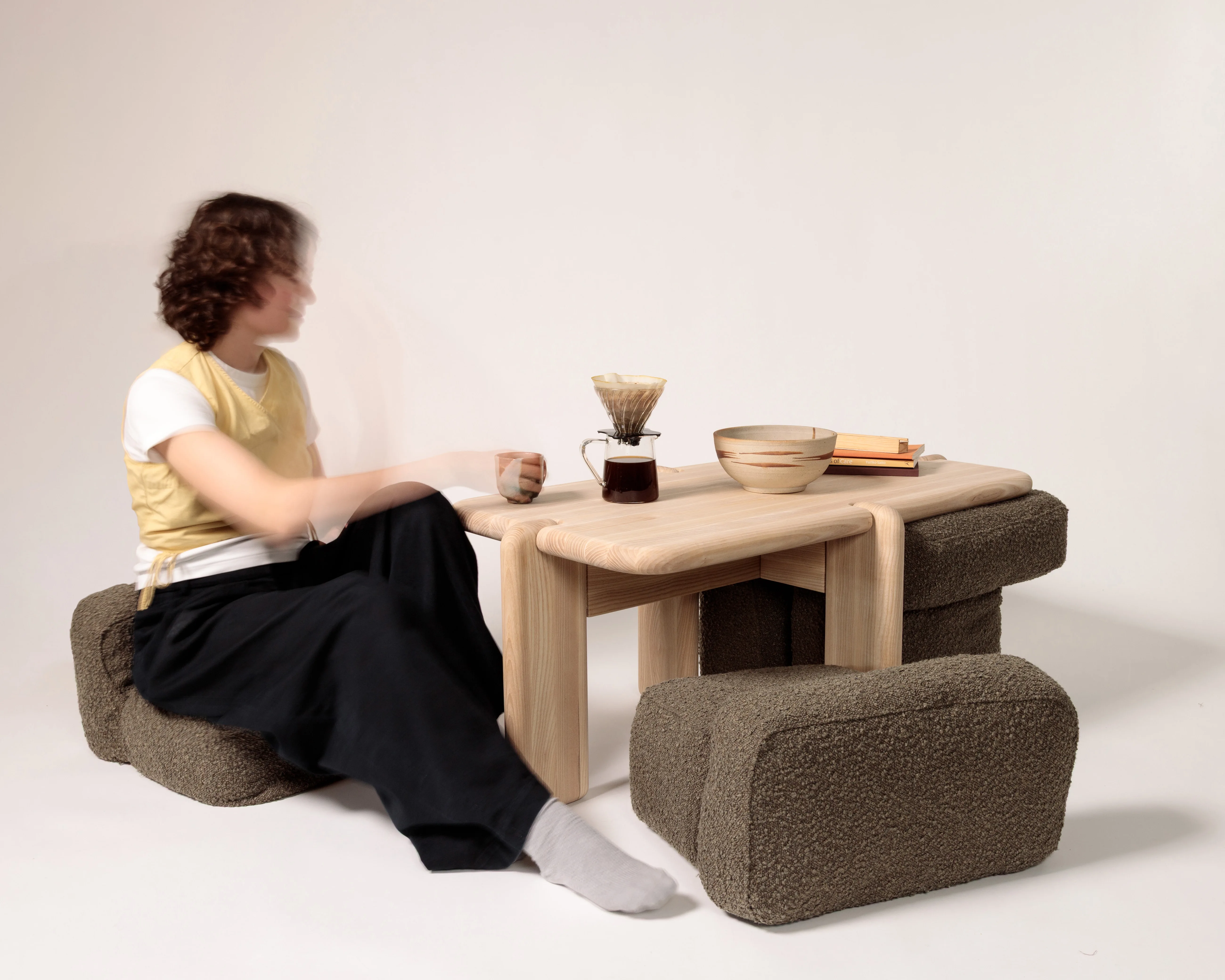
Kin
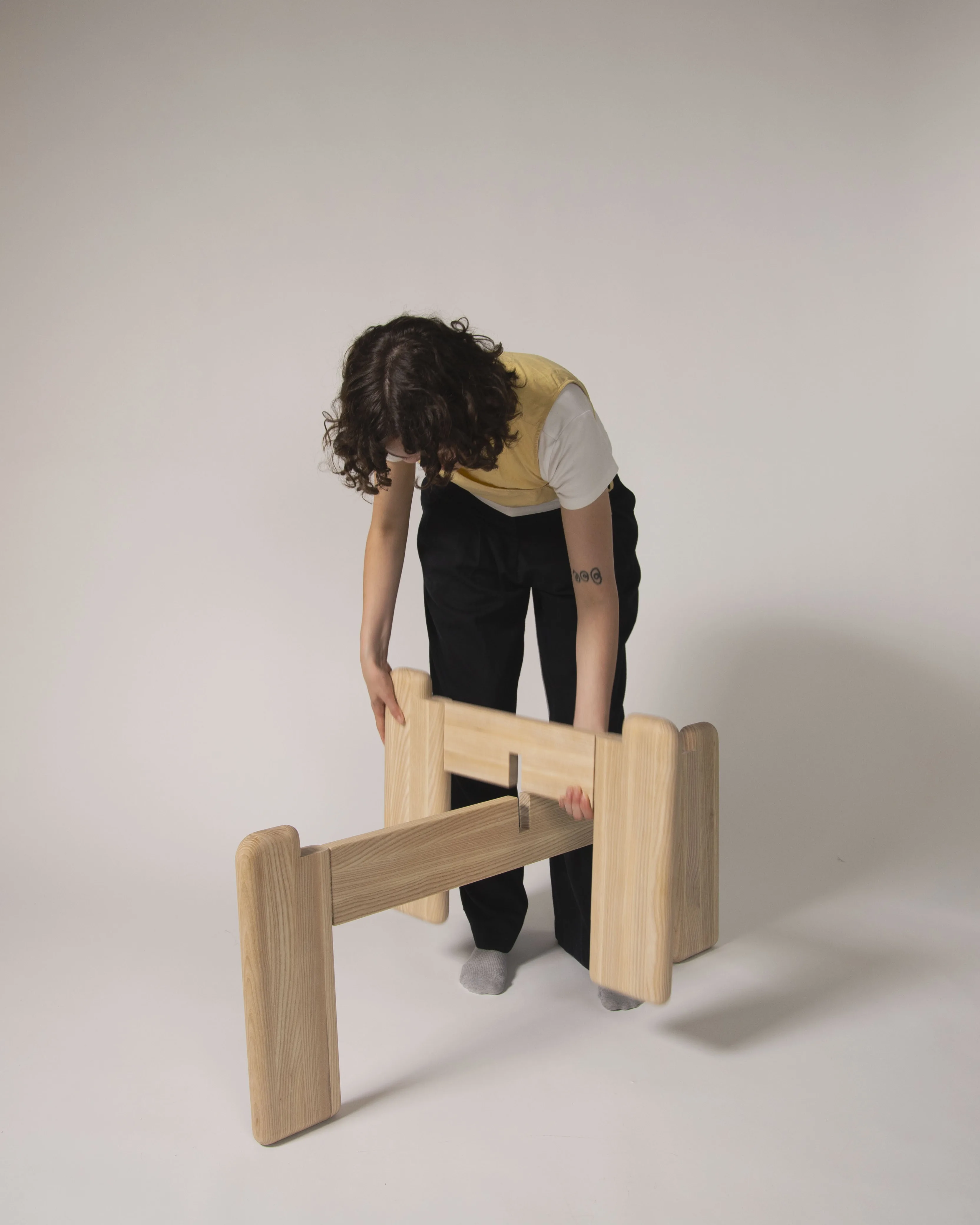
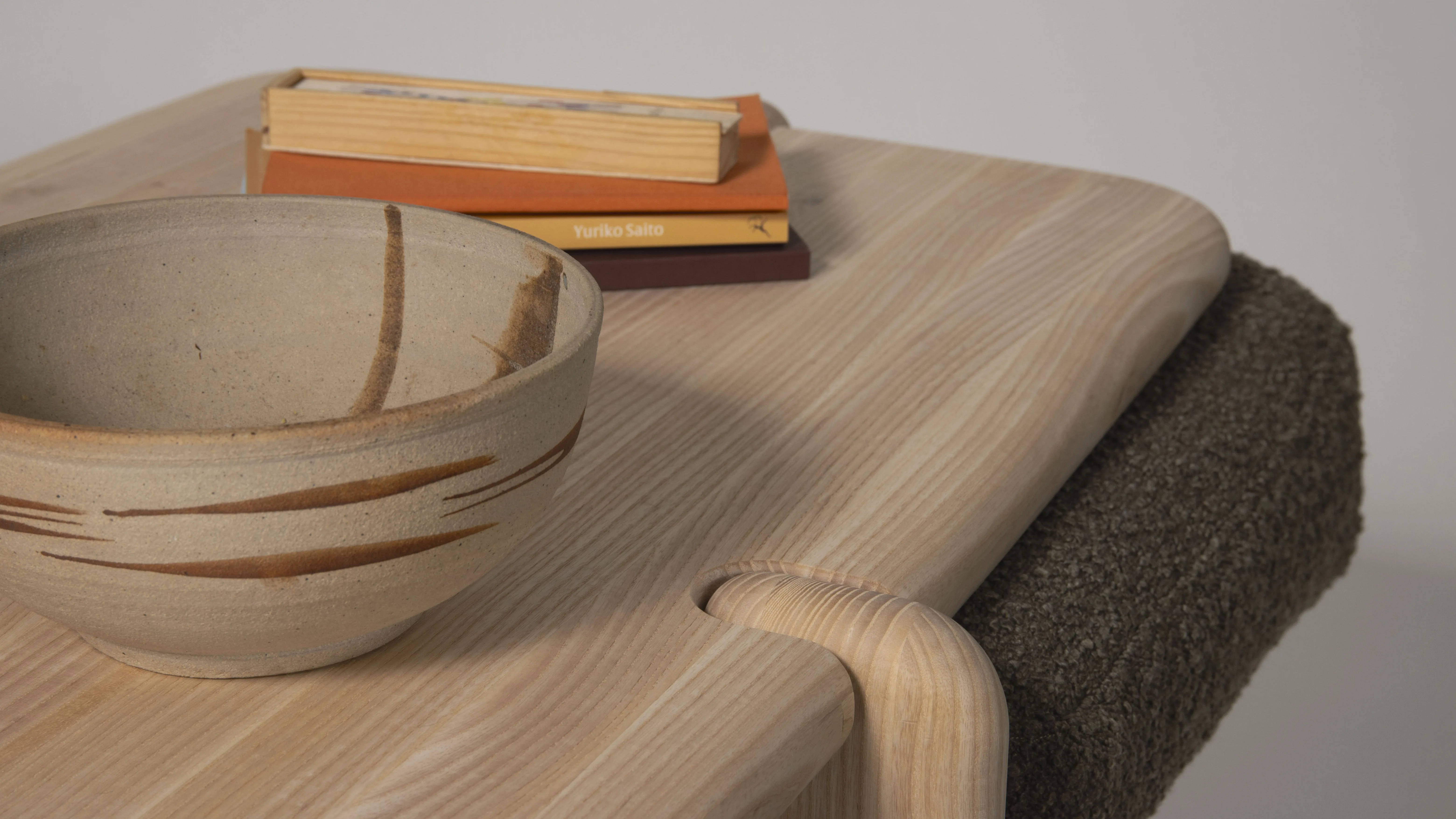
Kin is a small coffee table with cushions that tuck beneath it. When guests outnumber seats, the cushions can be pulled out and placed around the table as needed. When not in use, they contribute a generous cushioned edge that ties the shapes of the two parts together.
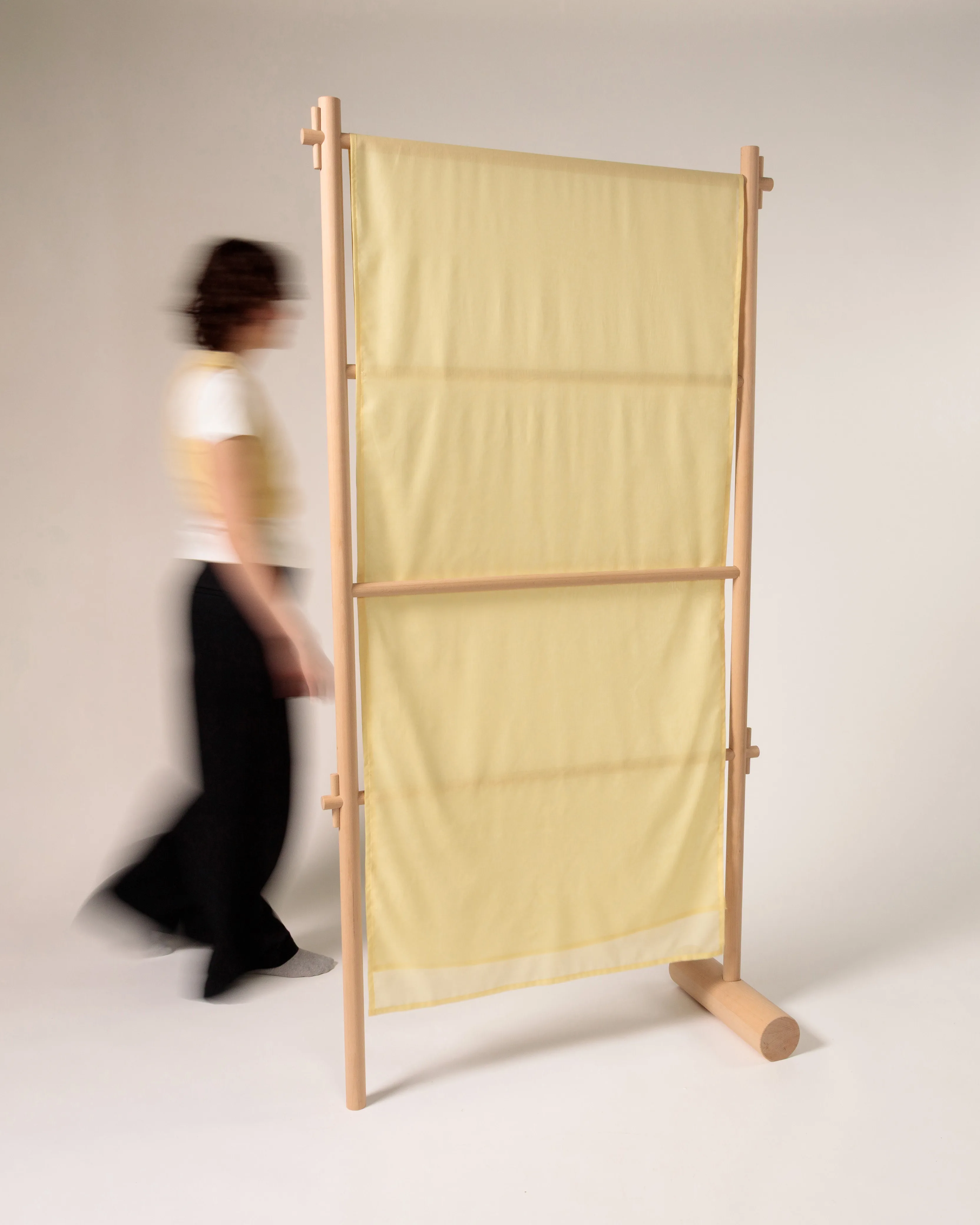
Trellis
Made to help a single space support different and simultaneous activities, Trellis is a space-dividing structure that can display textiles, hang clothes, or simply be a gentle boundary between one part of a room and another.
Publication
The full project is published as a book, presenting the principles as a self-contained section surrounded by the process and reflections that shaped them.